Sustainability & quality
Responsible wood, carefully prepared
Canadian hardwood from regulated forests, prepared with care and checked before every load.
- Canadian hardwood
- Quality checked before every load
Canada's forests in numbersNational figures on Canada's forests.More details
Canada's forest rules (facts)
Canada's forests in numbers
Canada's forests are managed under provincial and federal law. These national figures show the scale.
-
~0.2%
of Canada's forest area harvested in 2022
Below 0.4% of the managed forest every year for the last decade.
Source: Natural Resources Canada — Are Canada's forests harvested sustainably? (opens in a new tab)
-
By law
harvested public forests must be regenerated
By planting, seeding or natural regrowth.
-
<0.5%
of Canada's forest deforested since 1990
Deforestation means forest turned into farms, towns or roads — not harvest followed by regrowth.
Source: Natural Resources Canada — The State of Canada's Forests, Annual Report 2025 (opens in a new tab)
National figures — not our own harvest data.
What we do (client to confirm)
Where our wood comes from
We use hardwood that is not suited to lumber, so more of each tree is used.
- Private woodlots in our region, harvested under a management plan
- Sawmill offcuts and slabs from partner mills
- Storm-damaged and low-grade logs
- Wood sourced within about [X] km of our yard
How we prepare every loadEach step from the log to the loaded truck or container.More details
What we do (client to confirm)
How we prepare every load
Each step protects what you pay for.
-
1. Selection
- What we do
- We pick sound hardwood logs and set aside rotten or bark-heavy wood.
- Why it matters to you
- You get clean wood that burns evenly.
-
2. Cutting & splitting
- What we do
- We cut to your length and split to a steady size.
- Why it matters to you
- Logs fit your stove, oven or bags — no waste, no complaints.
-
3. Kiln drying
- What we do
- We dry the wood in a kiln until it reaches our target.
- Why it matters to you
- Kiln-dried wood lights easily, gives more heat and less smoke.
-
4. Heat treatment
- What we do
- We heat the wood until its core reaches the required temperature, for the required time.
- Why it matters to you
- It kills insects and diseases, so your load can cross borders.
-
5. Moisture check
- What we do
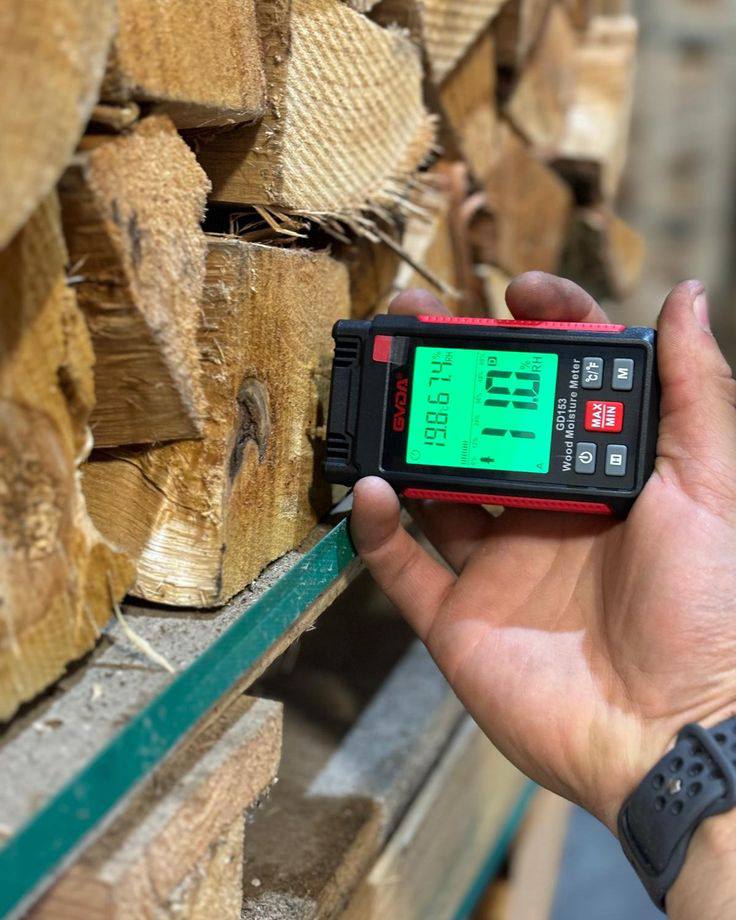
- We test samples with a moisture meter before packing.
- Why it matters to you
- You know the wood is under 20% before it ships.
-
6. Packing & labelling
- What we do
- We pack in the packaging you chose and label each unit with product, species and length.
- Why it matters to you
- Easy to count, store and sell.
-
7. Final inspection
- What we do
- We verify quantities, record moisture readings, and take dated photos of the load before it leaves.
- Why it matters to you
- You see what you bought before it arrives.
Why dry wood matters
Dry wood burns better
Freshly cut wood is full of water. Drying removes most of it — and that changes everything in the stove.
-
Lights easily
Dry wood catches fast. Less kindling, fewer complaints from your customers.
-
More heat, less smoke
The energy goes into heat, not into boiling off water. Less smoke and less creosote in the chimney.
-
Lighter loads
Water is heavy. With dry wood, you don't pay to ship water.
Sources: University of Kentucky — Firewood properties (moisture content of living trees) (opens in a new tab) · University of Kentucky Forestry Extension — Drying firewood (opens in a new tab)
Heat treatment
Heat treatment, explained
What it is
We heat the wood until its core reaches a set temperature, then hold it there for a set time.
Why it matters
Heat kills insects and diseases that could travel with firewood. That is why many countries require it.
The standards
- 60 °C (140 °F) 60 min USDA APHIS — Hardwood firewood
- 56 °C (133 °F) 30 min USDA APHIS — Softwood firewood
- 56 °C (133 °F) 30 min CFIA — HT Program — Heat-treated wood products exported under the Canadian Heat Treated Wood Products Certification Program
Sources: USDA APHIS (opens in a new tab) · CFIA — HT Program (opens in a new tab)
Quality
Our quality checklist
Before a load leaves our yard, we check:
- Consistent split size and length
- Clean wood — no bark-heavy or rotten pieces
- Moisture checked before packing
- Packaging labelled with product, species and length
- Export documents prepared for every shipment
Certifications: Certification details are available upon request.
EU Deforestation Regulation (EUDR)What the EU deforestation rules mean for your order.More details
For EU buyers
EU Deforestation Regulation (EUDR)
The EUDR covers wood products, including firewood. It applies from December 30, 2026 for large companies and from June 30, 2027 for micro and small companies.
We can provide the harvest origin and geolocation information your due-diligence statement needs — ask us when requesting a quote.
Read the export rulesSources: European Commission — Access2Markets: EUDR application dates (opens in a new tab)
FAQ
Questions about our wood
Is your wood from sustainable sources?
Our wood comes from Canada, where harvested public forests must be regenerated by law. We source hardwood from managed regional woodlots, storm-damaged timber, and sawmill offcuts not suited to lumber.
Is it treated with chemicals?
No. Heat treatment uses heat only — no chemicals, paint, or preservatives are ever used.
How do you measure moisture?
We split sample pieces and read the fresh inner face with a calibrated pin-type moisture meter, testing multiple samples across every batch before packing.
Can you send moisture readings with my shipment?
Yes — recorded moisture readings and dated photos of the load are included with your shipping documents.
Do you have certifications?
Yes, certification details — including CFIA phytosanitary and heat-treatment program records — are available upon request.
Show all questions (6)
What about bark and insects?
Loose bark falls away during splitting. Heat treatment kills insects and larvae inside the wood, which is why importing countries ask for it.
Want to see the wood first?
Ask us for photos of a recent load, or request a quote for a trial order.